Indian Star Tortoise Care Guide (Geochelone elegans) in India
Get link
Facebook
X
Pinterest
Email
Other Apps
My Star Tortoise "Rocky"
rocky eating vegetables
When you look at an Indian star tortoise, it’s easy to see why it gets its name. Each scute on the shell has multiple yellow lines radiating outwards, forming beautiful star‑like patterns on a dark background. This striking appearance makes the species popular in the Indian pet trade, although it is still less common than the red‑eared slider turtle.
Star tortoises are usually more expensive than sliders, often around ₹700–₹800 per tortoise, depending on size and availability in your area. Larger individuals typically cost more.
Before you decide to keep one, remember this very important point:
A star tortoise is a land tortoise, not an aquatic turtle. It comes from dry, scrubby habitats and cannot live in a water tank. It may manage to paddle for a short time, but eventually it will sink and can drown. Never keep an Indian star tortoise in a tank full of water.
Basic Description and Sex Differences
The Indian star tortoise has a high, dome‑shaped shell with black scutes and yellow lines radiating from the centre of each scute. The plastron (bottom shell) also shows yellow and black radiating patterns. Adults can grow up to around 10 inches in length.
Sexual dimorphism is quite apparent:
Females are usually larger than males.
Females have a flatter plastron.
Males have a concave plastron to help them climb onto the female during mating.
Knowing this helps you estimate sex and plan space and long‑term care if you keep more than one.
Space and Enclosure Requirements
Outdoor Housing (Preferred in India)
In a country like India, outdoor housing is often the best option for Indian star tortoises. They thrive in natural sunlight and benefit from space to roam, graze and exercise.
A good outdoor enclosure:
Size: Around 6 feet by 6 feet is suitable for 1–3 tortoises.
Walls:
You can use two layers of wire fencing – one with larger holes and one fine mesh wrapped over it.
Alternatively, use wooden blocks or boards at least 2 feet high so the tortoise cannot see over or through the walls (reduces escape attempts).
Ground:
Soil or grass can be used; grass is better for grazing and comfort.
You can plant taller grasses on one side so they have something to nibble.
Shelter:
Provide a hiding spot such as a small cave, wooden box or covered area where they can feel secure.
Water/Bathing Area:
Add a shallow tray or small pond‑like area so they can drink, soak and cool themselves.
Because tortoises are vulnerable, especially when young, you must also plan for predator safety. Cats, kites, crows, dogs and even mice can injure or kill baby tortoises if they get the chance. Make sure the enclosure is secure from above and below.
Indoor Housing
If outdoor space is not available or temperatures become extreme, you can keep star tortoises indoors.
Indoor setup ideas:
Use a large tub, wooden box or tank as an enclosure.
Provide:
A dry substrate like newspaper, soil or a combination (soil on one side, newspaper on another).
A hiding spot (small house, upside‑down box, etc.).
A heat source such as a bulb or a carefully protected heater to create a warm basking area.
Even if housed indoors, take them out in safe sunlight regularly to support vitamin D and bone health. For example, you can let them roam on a terrace or roof briefly, with supervision, where they hide behind flower pots and explore.
For younger star tortoises, indoor housing is usually safer because they are more delicate and more easily targeted by predators.
Temperature and Humidity
Indian star tortoises generally do well at warm, dry temperatures:
Ideal range: Around 28–32 °C (80–90 °F).
They can tolerate slightly warmer temperatures up to 35 °C if they have shade and a drinking/bathing area.
Important points:
Keep the enclosure dry, not constantly wet or humid.
If indoor substrate becomes damp, change and dry it.
Outdoor enclosures usually handle moisture better, but watch for extreme conditions.
In Indian summers, temperatures can shoot up to 45–48 °C in some regions. During such times, especially in the afternoon:
Keep the tortoise indoors or in a shaded, cooler part of the house.
Limit basking time to early morning (1–2 hours) instead of the whole day.
Indoors, they can be kept in a normal room without cooler or AC. In fact, a room without a cooler or AC is often better:
It mimics a more natural climate they would experience in the wild.
Coolers and ACs may create too much cold or humidity, which is not ideal for them.
Basking and Sunlight
Like other reptiles, Indian star tortoises need basking for vitamin D synthesis and healthy bone and shell growth.
Outdoor Basking
Provide an open sunny area plus shaded spots (patch of grass, small bush, or shelter).
This allows them to move between sun and shade to regulate their temperature.
Indoor Basking Options
If you keep them indoors:
You can set up a professional tortoise UVB and basking system if available (often costly and not easy to find in all Indian cities).
A more DIY approach is to use a table lamp with a bulb (not CFL) and a reflector/cover to concentrate light over a basking area in the enclosure.
Some keepers use aquarium heaters or thermostats with guards, combined with rocks or metal near (not touching) the heater to create localized warmth.
No artificial method can fully replace natural sunlight. Even with bulbs and heaters, aim to take your tortoise outside for real sun at least 3–4 times a week, when conditions are safe.
Diet: Strictly Herbivorous
The Indian star tortoise is strictly herbivorous. The goal is a dry, low‑protein, low‑fat, high‑fibre diet – as close as possible to what it would find in dry grassland habitats.
Foods You Can Offer
You can feed:
Spinach (in moderation), grasses from lawn and fields
Garden flowers like hibiscus, petunias and rose petals (many tortoises love them)
Sprouts (using the sprouted part and removing the hard seed portion)
Grape leaves and other safe leaves
Local green leafy vegetables (“bhajis”) widely available in Indian vegetable markets
Many types are accepted; some individuals may dislike certain varieties like “lal bhaji” (red spinach), but enjoy others.
Cucumber and tomato occasionally (not regularly; too much wet food can cause diarrhoea)
Radish leaves (often very popular), “kakdi” (summer cucumber‑like vegetable), lady’s finger (bhindi), ivy gourd (kundru), spring onions (green onions and tops), bell peppers (Shimla mirch) in small amounts.
Foods to Use with Caution
Wet foods such as:
Cucumber
Tomato
Lady’s finger (fruit; leaves are fine)
Radish root
Kakdi
These should be given in moderation because too much watery food can lead to loose stools and digestive upset.
Peas are best avoided or used very rarely. Many tortoises love peas so much that they start picking them out of the mix and ignoring other foods, which can lead to diarrhoea and an imbalanced diet.
Feeding Frequency and Supplements
Young tortoises: Feed twice a day.
Older tortoises (around 8 inches and above): Once a day is usually enough.
Calcium is very important for shell and bone health:
You can use human calcium tablets (like Calcium Sandoz) in tiny, crushed amounts sprinkled over food.
Offer hay, grasses and even cleaned, de‑thorned cactus (after thorough washing) for fibre and variety.
Always wash food thoroughly and use chemical‑free, ideally organic produce when possible.
Avoid:
Non‑vegetarian food
Very high‑protein diets
Frequent fruit or rich, soft foods
Aim for a diet that is mostly dry, fibrous, and based on grasses and leafy greens.
Poop Check
Healthy star tortoise poop should be:
Dark in colour
Firm in texture
If poop is loose, watery, green or unusually coloured, there may be a dietary problem or intestinal parasites. When in doubt, review the diet and consult a vet.
Bathing and Hydration
Star tortoises often enjoy bathing if done correctly. Bathing can also encourage them to drink water and defecate.
Correct bathing method:
Hold the tortoise under a slow stream of lukewarm water, or
Place it in a box or bucket with warm water up to the level of the legs and the lower edge of the shell.
Gently pour lukewarm water over the shell using a mug.
The tortoise should not be fully submerged and should not attempt to swim. The water level should stay shallow – just enough for soaking and walking. Often, the warm water stimulates the tortoise to poop, which helps keep the main enclosure cleaner.
If you bathe daily, be careful especially in winter and monsoon seasons to avoid chilling the animal.
Health, Hygiene and Miscellaneous Tips
New, young tortoises
Prefer indoor, dry, warm enclosures until they grow stronger.
Avoid humid and wet conditions for long periods.
Information and common sense
Read as much as you can about Indian star tortoise care, but adapt it to Indian conditions.
Not everything available online (like specific UV lamps or imported products) will be accessible or practical in India.
Observe your individual tortoise’s preferences; even tortoises from the same batch may differ (for example, one may love rose petals while others ignore them).
Medicine (Trustogyl and similar)
For suspected stomach infections or systemic problems, some keepers use medicines like Trustogyl (containing metronidazole and norfloxacin) in carefully adjusted doses.
These should ideally be given under veterinary guidance, either directly via dropper or mixed with favourite food.
Self‑medication always carries risks, so consult a reptile‑friendly vet whenever possible.
Cleaning and disinfection
You can wipe the enclosure with a very diluted Dettol solution every few days or whenever it gets soiled, to keep it relatively germ‑free.
If you provide extra calcium frequently, watch for signs of loose motions and reduce the frequency if needed.
Wounds and minor injuries
If the tortoise gets hurt, gently clean the wound with a diluted antiseptic on the first day.
Apply a suitable antibacterial powder (like Neosporin) twice daily.
Good food and sunlight will support healing, but serious wounds still need veterinary attention.
Handling and hygiene for you
Tortoises can carry bacteria, so clean hands are important.
If you handle them often, keeping a hand sanitiser nearby is convenient and reduces the need to wash hands every single time.
An Indian star tortoise is a beautiful, long‑lived, strictly herbivorous reptile that needs dry, warm conditions, sunlight, space to roam, and a high‑fibre plant diet. With careful planning and observation, they can become fascinating companions for many years.
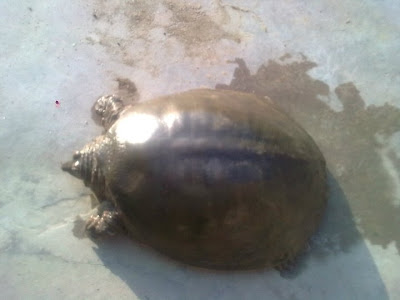
My 12" Flap shell turtle flap shelled turtle from beneath The Indian flapshell turtle is one of the most common freshwater turtles found in India. You can often see it in village ponds, slow streams, marshes, and even near houses during the rainy season. It is also frequently sold in local fish markets. This species has a soft, leathery shell rather than a hard, scute‑covered shell. It gets the name “flapshell” from the skin flaps on the plastron above the legs, which cover the legs when the turtle retracts into its shell. It has a noticeable snout, giving it a distinctive look compared to hard‑shelled turtles. Typical size ranges from about 240 mm to 370 mm in shell length. In this guide, we’ll look at diet, enclosure requirements, and basic breeding information for Indian flapshell turtles. Don’t forget to look at the sketch below to understand the basic tank requirements and layout for a turtle enclosure. Diet: Omnivorous Feeder The Indian flapshell turtle ...
It is also sold as Singapore Turtle or American Turtle along with Red Eared Sliders as they resemble them when young. Since it was my first turtle and I didn't knew much about turtles at that time but i have created a visual guide above for your reference From the images above you can see clearly why it is so easy for them to be confused for Red eared sliders by inexperienced keepers. The Indian tent turtle (Pangshura tentoria) is a medium‑sized freshwater turtle found in many rivers and slow‑moving waters across India. It’s an attractive, active species that can do well in a home setup if given proper space, clean water, basking, and a varied omnivorous diet. In this post, I’ll share how to set up a basic enclosure, what to feed an Indian tent turtle, and some important hygiene and handling tips based on practical experience. Enclosure Setup for Indian Tent Turtle The basic enclosure for an Indian tent turtle is similar to what you would use for other semi‑aquatic turtle ...