Indian Flapshell Turtle (Lissemys punctata) Care Guide
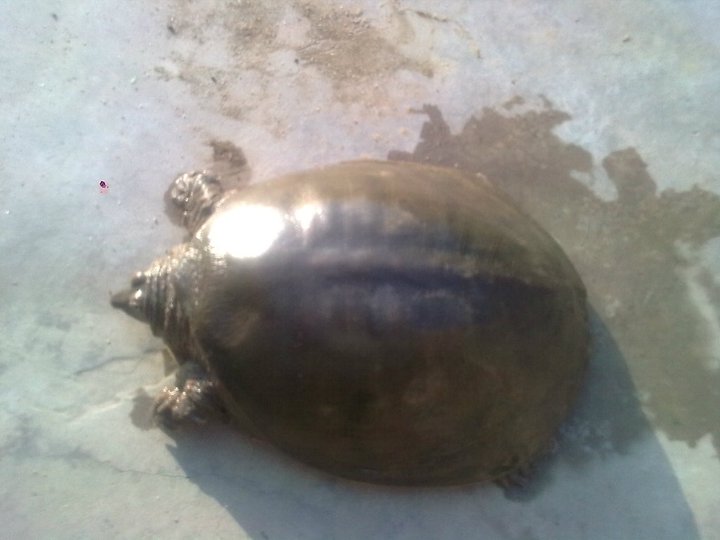 |
| My 12" Flap shell turtle |

 |
| flap shelled turtle from beneath |
The Indian flapshell turtle is one of the most common freshwater turtles found in India. You can often see it in village ponds, slow streams, marshes, and even near houses during the rainy season. It is also frequently sold in local fish markets.
This species has a soft, leathery shell rather than a hard, scute‑covered shell. It gets the name “flapshell” from the skin flaps on the plastron above the legs, which cover the legs when the turtle retracts into its shell. It has a noticeable snout, giving it a distinctive look compared to hard‑shelled turtles. Typical size ranges from about 240 mm to 370 mm in shell length.
In this guide, we’ll look at diet, enclosure requirements, and basic breeding information for Indian flapshell turtles.
Don’t forget to look at the sketch below to understand the basic tank requirements and layout for a turtle enclosure.

Diet: Omnivorous Feeder
The Indian flapshell turtle is omnivorous, which means it eats a wide variety of animal and plant foods. In nature it feeds on:
Snails
Frogs and tadpoles
Fish
Shrimps
Aquatic plants
Flowers and fruits
Plant leaves and other vegetation
In captivity, you can offer similar items. Many individuals love aquatic plants. These are easily available at fish stores now for planted aquariums. You can buy inexpensive varieties or collect healthy plants from clean ponds and marshes if you know a safe location.
You can also try offering commercial turtle pellets. Some flapshell turtles will accept them, but others may refuse. For example, my own flapshell never ate turtle food despite repeated attempts, and preferred natural foods instead. Still, it is worth trying for convenience and variety – you might be lucky and have a turtle that accepts them.
Always avoid overfeeding and remove uneaten food to keep the water clean.
Enclosure and Tank Setup
In the wild, Indian flapshell turtles prefer quiet, stagnant or slow‑moving waters with sand or mud at the bottom. They like to burrow into the substrate and hide, so your enclosure should mimic this as far as possible.
Outdoor Pond
If you have access to an outdoor pond:
A shallow, calm pond with sandy or muddy bottom is ideal.
Provide a basking area where the turtle can climb out of the water and dry under sunlight.
Ensure the pond is safe from predators and escape routes are blocked.
Indoor Tank or Aquarium
If you are keeping them indoors:
Use sand or mud as the substrate so the turtle can burrow.
Provide a dry basking platform above water level.
Install a bulb or suitable basking lamp focused on the platform, so the turtle can warm up and dry its shell.
Because flapshell turtles are messy and produce a lot of waste, filtration is very important:
External canister filters are usually the best option for turtle tanks.
A pump inside the tank sends water to a canister outside, where it passes through multiple filter media and then flows back into the tank via an outlet.
This setup handles waste better than small internal power filters and makes maintenance easier.
You will need a powerful filtration system, as this species tends to dirty the water quickly, especially if fed meaty foods.
Tank Layout Reminder:
A basic idea of the enclosure you can get from the sketch below: this layout is applicable for setting up the tank for any turtle. It shows all the essential elements – water area, basking platform, light, filter intake and outlet, and hiding spaces – that are absolutely necessary. More features can be added based on your creativity and available space.
Breeding and Sexing
Indian flapshell turtles typically reach adulthood around 2–3 years of age, depending on growth and conditions.
Sex Differences
In general:
Males tend to have a more elongated body shape.
Females have a broader, more ovoid shell shape.
Males usually have a longer tail compared to females.
These differences can be seen clearly when you compare a male and female side by side.
For more detailed methods of sexing Lissemys punctata (flapshell turtles), you can refer to specialised resources that explain tail, vent position and shell shape differences in depth.
Breeding and Egg Laying
After mating, female flapshell turtles usually lay eggs twice in a year. Each clutch may contain:
Around 2–12 eggs
In a nest dug in sandy or muddy ground exposed to sunlight
If you are keeping a breeding pair:
Provide a suitable nesting area with soft sand or mud.
Ensure the female has an easy way to get out of the water and reach this nesting zone.
Avoid disturbing the nesting area once eggs are laid.

male is on right with elongated body and female is on left with more ovoid shape of body, also see the longer tail of male.

