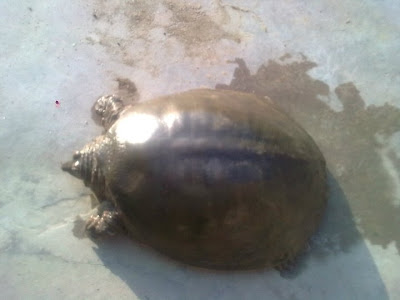
Indian Tent Turtle (Pangshura tentoria) Care at Home – Complete Guide

The Indian tent turtle (Pangshura tentoria) is a medium‑sized freshwater turtle found in many rivers and slow‑moving waters across India. It’s an attractive, active species that can do well in a home setup if given proper space, clean water, basking, and a varied omnivorous diet.
In this post, I’ll share how to set up a basic enclosure, what to feed an Indian tent turtle, and some important hygiene and handling tips based on practical experience.
Enclosure Setup for Indian Tent Turtle
The basic enclosure for an Indian tent turtle is similar to what you would use for other semi‑aquatic turtle species. At minimum, you need:
A tank with enough space for swimming
Clean water
Optional substrate
Strong filtration
A basking platform
A basking light
A heater/thermostat to keep water temperature stable
Personally, I do not prefer substrate in the tank. Sand or gravel may look nice, but it tends to trap uneaten food and poop, making cleaning harder and increasing the risk of dirty water and disease. A bare‑bottom tank is easier to maintain and keep hygienic.
Basic Tank Requirements
Aim for:
Water temperature around 75–85 °F (about 24–29 °C)
A strong filter rated for a larger tank than you actually use (turtles are messier than fish)
A solid basking platform that the turtle can easily climb onto
A basking light positioned above the platform
Think of the setup as: swimming area + dry basking area + clean, warm water.
If you are lucky enough to have a pond:
Make sure it is covered or fenced so the turtle cannot climb out.
Protect it from predators such as kites, cats, dogs and other animals.
Provide shallow areas and a dry basking spot where the turtle can climb and sun itself.
Basking Light and UV
The basking platform should be easily accessible; the turtle should be able to climb on it without struggling.
For basking:
Use an 80–100 W bulb positioned safely above the platform to create a warm, dry area.
If possible, add a UVB light at the basking site to support vitamin D and shell health. These are often available online.
If you cannot get a UVB lamp, make sure you allow your Indian tent turtle to go outside in natural sunlight for at least 2 hours a day when conditions are safe. Sunlight is one of the best “medicines” for shell and bone health.


Diet and Behaviour
Indian tent turtles are omnivores, which means they eat both animal and plant foods.
Foods You Can Offer
I have successfully fed mine a wide variety of items, including:
Ghost shrimps
Crickets
Earthworms
Snails
Mosquito larvae
Aquatic insects
Feeder fish (in moderation)
Aquatic plants
Spinach
Carrot
Radish leaves
As juveniles, they are usually more carnivorous and will happily eat a lot of animal‑based food. As they grow older, they often start preferring more vegetarian options and aquatic plants.
A few tips:
Offer a mix of natural foods and good‑quality commercial turtle pellets if they accept them.
Remove uneaten food after feeding to keep the water clean.
Do not overfeed meat; balance with plant matter to avoid obesity and water pollution.
Size and Sex Differences
Indian tent turtles usually reach around 8–12 inches in shell length.
Females generally grow larger than males.
Males are often brighter in colour, especially on the head and limbs.
There is not much accessible information on breeding, and I personally was not able to find a female to attempt breeding. If any keepers have more breeding experience with Pangshura tentoria, they are welcome to share, and their contributions can be acknowledged in the post.
Intelligence and Personality
In my experience, Indian tent turtles are one of the more intelligent and playful turtle species.
Over time, once they recognise you as their regular caretaker:
They may come to the front of the tank when they see you.
They often respond to feeding routines and can seem almost “interactive”.
Some individuals will follow your hand movements or appear to “play” around you.
This makes them very enjoyable to keep, but it also tempts many owners to handle them like a cat or dog. That’s where some caution is important.
Handling, Hygiene and Safety
Even if they look cute and seem friendly, Indian tent turtles are still reptiles, not cuddly mammals. There are two big reasons to limit handling:
Health risk to humans
Turtles can harbour bacteria such as Salmonella, typhoid‑causing organisms and other pathogens.
Frequent handling without proper hand‑washing or sanitising increases your risk of infection.
Stress and unnatural behaviour for the turtle
Imagine being lifted off the ground and held in the air for long periods. For turtles, this is not a natural situation.
Many turtles find constant handling stressful, even if they seem calm.
If they become “used to” being held, you may unintentionally change their natural behaviour and stress responses.
A simple rule:
Handle only when necessary (health checks, tank cleaning, short “hello” moments).
Wash or sanitise your hands after touching the turtle or tank water.
Avoid letting children treat the turtle like a toy.
This advice applies not just to Indian tent turtles, but to all turtle and tortoise species.
Summary
Caring for an Indian tent turtle (Pangshura tentoria) at home is very rewarding if you:
Provide a proper semi‑aquatic enclosure with basking and clean, warm water.
Offer a varied omnivorous diet that slowly becomes more plant‑rich as the turtle matures.
Give them sunlight or UVB for healthy shell and bone growth.
Respect their nature by limiting handling and keeping good hygiene.